This tab is hidden from the public. If you are seeing this please let us know through the contact us page.
The training we provide is directly informed by the 16 years of international research Dr Louise Byrne and her team have conducted, focused on Lived-Living Experience workforce.
This evidence informs many key policy documents and initiatives worldwide, across a broad range of sectors and specialisations.
The program of research includes both qualitative and quantitative studies. The studies have been peer reviewed and published in highly regarded scientific journals internationally. The findings have also been thoroughly tested, verified and warmly approved of by Lived-Living Experience communities.
To learn more, check out our translation website, which has plain language summaries of the research findings, plus links to the full published papers, this will open in a new tab:
The training has been developed to be relevant across specialisations and settings.
The research includes participation by folks representing a vast range of specialisations and settings, including but not limited to: Alcohol and Other Drugs, Mental Health, Veterans, Eating Disorders, Suicide prevention, First Nations, Culturally and racially marginalised services etc. Likewise, geographically diversity and settings with different types of funding were explored.
The research found challenges and enablers for Lived-Living Experience workforce were consistent, with the same issues emerging across service types. As a result, findings of the research have high transferability.
We have recently been funded to provide both the Orientation and Foundational Knowledge training to the entire state of Queensland – across all sectors, including mental health, alcohol and other drugs, suicide prevention and other human services sectors such as housing/homelessness, disability, harm reduction, First Nations, etc.
We feel the Queensland Mental Health Commission investment in our training speaks to the transferability of our work.
Many people with diverse perspectives contributed to the program of research that informs this training, including:
- people working in both personal/consumer and family/carer roles
- people representing a vast range of intersectional perspectives including diverse cultures/backgrounds, identifications and experiences
- people representing multiple specialisations, sectors and countries
- folks employed in various non-designated roles, including all levels of management and executive positions (to assist in understanding the broader context and how to encourage better understanding and valuing of Lived-Living experience roles
Likewise, the research team included people who could authoritatively represent diverse cultures/backgrounds, identifications and experiences and did so in other professional contexts, including First Nations cultural advisors/researchers and researchers representing LGBTQIA and Culturally and Racially Marginalised perspectives.
This inclusion of diverse perspectives from concept design through all stages of development and evaluation, embeds diverse and intersectional views in the findings of the research and within the training.
The term recovery can seem off-putting. But there are different definitions of recovery.
In this training, we’re talking about the concept of personal recovery that was devised and championed by people with lived-living experience as early as the 1800s.
Personal recovery describes moving towards a life that is chosen by us, that is meaningful, satisfying and self-directed, whatever that looks like for us.
This is different to concepts of clinical recovery, which has a deficits approach (what is ‘wrong’ with you) and focuses on cessation, symptom reduction, or the 12-step recovery approach common in alcohol and other drug (AOD) settings.
While the term itself sounds a bit misleading and is confusing with so many other concepts of recovery, we still refer to it because it has massive political clout.
Since the 1990s, policy in many countries has been directing a move from a biomedical focus, towards personal recovery approaches – which emphasise our control and guidance of our service or healing journey.
Since personal recovery was developed by us, for us and is best understood by those of us who have direct experience of challenges/healing or supporting another in their journey, it aids our credibility as discipline, highlights our unique expertise and empowers Lived-Living Experience leadership.
So, we may not love the term, but the influence it can provide us is irreplaceable in advocating for systems change.
Lived-Living experience communities have a firm commitment to honouring multiple perspectives, including the terms we use.
Language is evolving rapidly and will continue to change over time. Different key terms are favoured in diverse settings, including the terms ‘Lived Experience’ and ‘Lived-Living Experience’ which are both used to describe significant, life-changing experiences of adversity and healing.
The longer term, Lived-Living Experience has grown popular in recent years as it makes more explicit the fact that many of us do and will live with our adversity challenges for the rest of our lives, and it’s not something that has ended, been resolved or concluded for many Lived-Living Experience workers.
At Lived Experience Training (.org) we switch between these and other popular terms to be as inclusive as possible. Any use of or lack of using preferred terms is not intended in to offend, we are focusing on terms with the highest recognition for broad audiences.
Accessibility includes particular consideration of the learning needs of people who are neurodiverse, people with low literacy, people who are Deaf or hard of hearing, and people who are blind or have low vision.
With advice from consultants, attention has been paid to providing a streamlined and user-friendly experience, with an emphasis on clean, simple graphics and fonts, and intuitive navigation.
All learning materials are provided in video format with optional subtitles, and a companion visual descriptions transcript (for Screen Readers), which explains the changing visual elements within videos. Headings of different levels have been included throughout the website and course material to aid navigation.
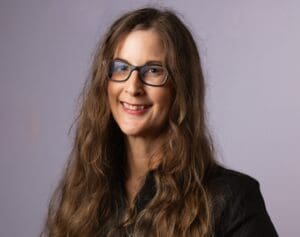
Dr. Louise Byrne
Dr Louise Byrne is a former Fulbright scholar and current Senior Research Fellow. Louise is a leading international expert on Lived Experience, acknowledged as a thought-leader in Lived Experience/Peer workforce development and the change management strategies required to build authentic, effective, and impactful Lived Experience Workforces.
Louise’s name is synonymous with highest quality, evidence-informed work, setting benchmarks for best practice and enhancing understanding of and fidelity to the Lived Experience discipline.
Louise’s work is informed by her own Lived-Living expertise and her experience in a range of designated Lived Experience roles across sectors and settings, since 2005. Louise trained in Intentional Peer Support, and since 2010 has led an internationally ground-breaking body of research on Lived Experience workforce development, culminating in numerous frameworks, policies, and models here and overseas, including the ‘Queensland Framework for the Development of the Lived Experience Workforce’, and the ‘National Lived Experience (Peer) Workforce Development Guidelines’.
Louise’s program of research has created a theory of change for how to advance acceptance of collaboration with, and leadership opportunities for, the Lived-Living Experience workforces.
To learn more about Louise’s body of work go to the link which will open in a new tab: https://www.drlouisebyrneconsulting.com/

Dr. Melissa Chapman
Dr Melissa Chapman is a Family/Carer Lived Experience Researcher with a PhD in Industrial and Organisational Psychology. She currently uses her knowledge and skills across broad areas, such as: inclusion and diversity, mental health/wellbeing and the changing nature of work.
Melissa has worked collaboratively with private, not-for-profit, university and government organisations and since 2019 has been contributing significantly to the Lived Experience evidence base, including being a core team member on the Australian ‘National Lived Experience (Peer) Workforce Development Guidelines’, the ‘Queensland Framework for the Development of the Mental Health Lived Experience Workforce’, and the ‘Victorian Mental Health Consumer Discipline Framework’, amongst others.
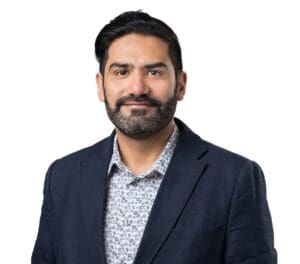
Puneet is a Lived Experience Researcher. He holds academic roles at University of Melbourne, La Trobe University and at RMIT University as a Consumer Academic and a Research Assistant. Puneet is also a member of the Lived Experience Advisory Panel at the Victorian Collaborative Centre for Mental Health and Wellbeing. Puneet gained experience as a consumer peer support worker and a consumer consultant within Victoria’s public mental health system, developing relationships with fellow community members with lived and living experience of mental health distress. Puneet has a passion for contributing to systemic and policy change by advocating for consumer rights in the decisions related to consumer care and having Lived Experience roles and perspectives embedded into every part of the consumers’ journey. Puneet is a recent graduate from Victoria University, gaining a master’s degree by research, exploring workplace stress and staff wellbeing and is currently contributing to research led by Dr Louise Byrne and Dr Melissa Chapman on peer roles in the Department of Veteran Affairs. Puneet is committed to advocating for reduced workplace stress across all sectors and for work culture that is supportive of positive mental health in workplaces.
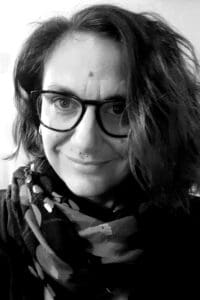 Miranda Frare
Miranda brings a warm and personal touch to her work, drawing from her own personal (consumer) Lived and Living Expertise. Miranda has hands-on experience in direct service, projects, training, research, and developing strategic solutions. Miranda has trained in Intentional Peer Support and is working towards an undergraduate psychology degree. Miranda’s all about digging into the evidence and collaborating to create systems where the LE workforce can succeed. She loves simplifying info with clear language and visuals so everyone can understand it easily. In her free time, she volunteers with LGBTQIA+ groups, referees roller derby, and is a huge NYT crossword fan.

We are proud to collaborate with:
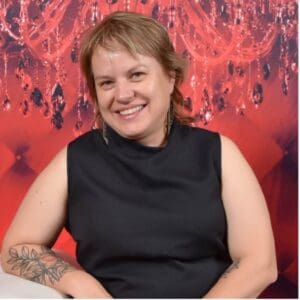
Helena Roennfeldt
Helena recently completed her PhD on experiences of mental health crises and crisis care. She has qualifications in Social Work, Suicide Prevention, Forensic Mental Health, and Mental Health Practice. Helena has a background in lived experience work and has lately had the honour of doing more independent consultancy work with incredible organisations such as Lived Experience Training.
Her work is deeply informed by her experiences of trauma, including psychiatric trauma from multiple involuntary admissions and periods of seclusion. She loves peer support, yoga, somatic practices, sound healing, and community building. She believes in the transformative power of the heart and the alchemy that comes with truly ‘being with’. Helena also lives on an island with five ducks, four chickens and one cat, Millie.
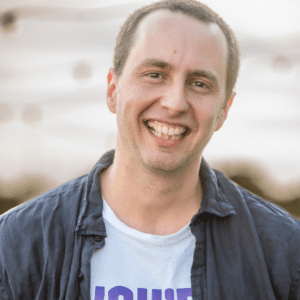
Simon Katterl
Simon Katterl (he/him) is a mental health and human rights advocate with lived experience of mental health and using public community and private mental health services. He runs a consultancy advising government, mental health and legal bodies, on consumer leadership, human rights and governance. Katterl’s work includes advising the Victorian Minister for Mental Health, various government departments, and providing consumer perspective supervision. He also undertakes public advocacy in favour of human rights and has written for academic and news outlets https://www.simonkatterlconsulting.com/contact
To view a range of testimonials, please Click Here